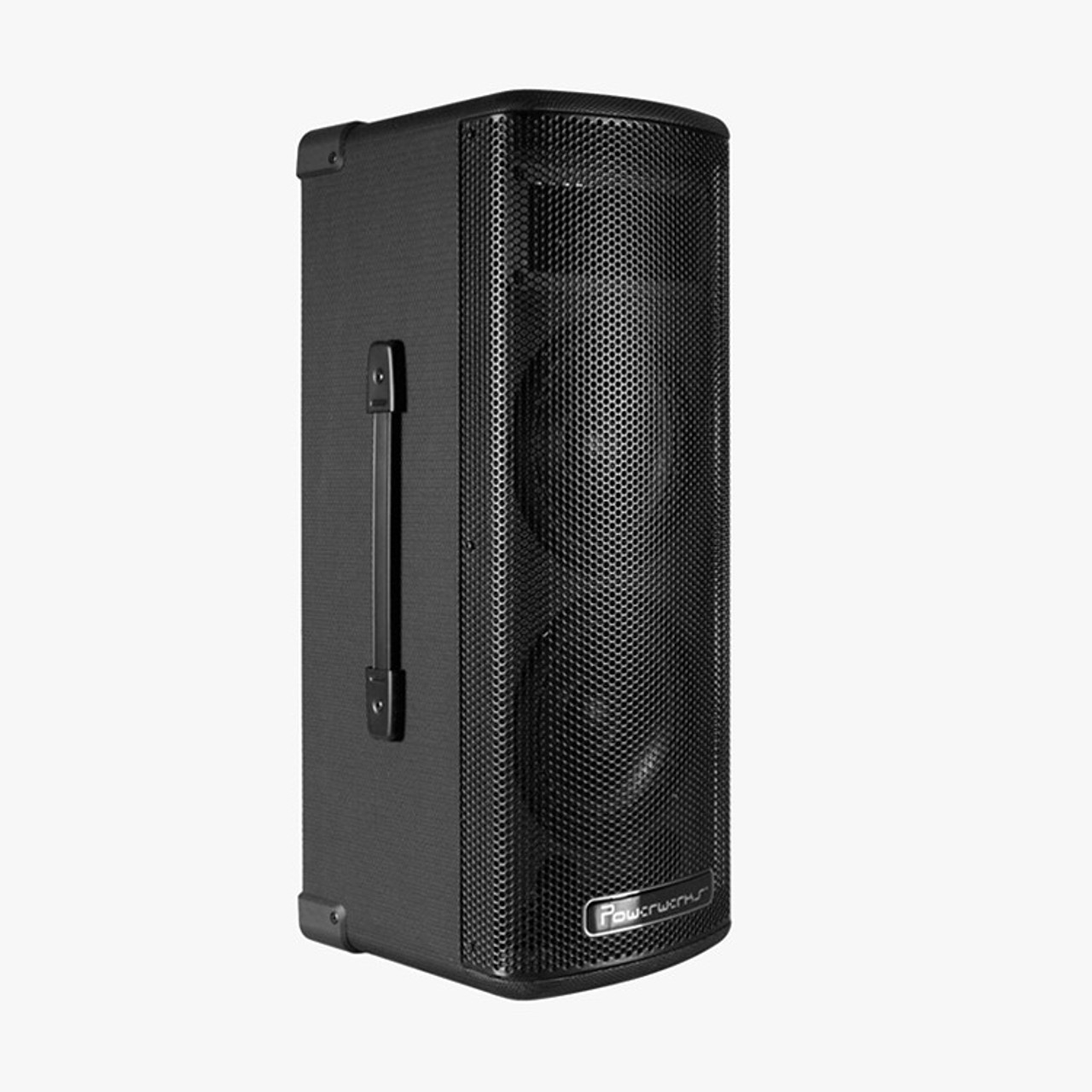
Product images are provided for reference and may not represent the exact model, configuration, or included components.

At A Glance

Output Power
200 Watts Peak
Low Frequency
Two 6" Speakers
High Frequency
1" Neodymium Compression Driver
Crossover
3 kHz
Maximum SPL
117 dB
Frequency Response
80Hz-20kHz
Connectors
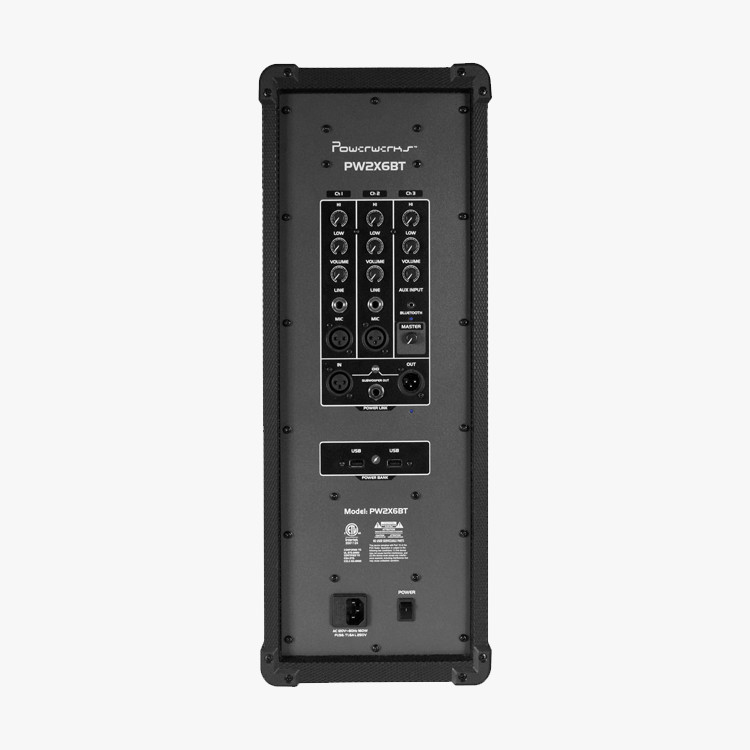
2 XLR mic inputs, 2 1/4" instrument jacks, 1 3.5mm AUX input, 2 USB Powerbank jacks
Cabinet
Medium Density Fiberboard
Controls
3 channel, Hi, Low, Volume. Master
Dimensions (Inch
9.5 D" x 8" W x 21.65" H
Weight
22.5 lbs
Description

Powerwerks built the PW2X6BT as a portable, self-contained PA tower aimed at performers who required an integrated system in a single compact cabinet. A three-channel powered mixer and amplifier were mounted directly into the rear of the Medium Density Fiberboard cabinet, and the unit included Bluetooth connectivity alongside its wired inputs.

The amplifier section delivered 200 watts peak through a two-driver configuration: two 6-inch low-frequency speakers crossed over at 3 kHz to a 1-inch neodymium compression driver for high frequencies. Frequency response was rated at 80 Hz–20 kHz with a maximum SPL of 117 dB. Each of the three channels carried independent volume control alongside shared Hi and Low EQ controls and a master level control. Connectivity included two XLR microphone inputs, two 1/4-inch instrument jacks, a 3.5 mm AUX input, and an AUX/Bluetooth channel for wireless audio streaming. Two USB Power Bank jacks allowed connected USB devices to be charged or powered from the unit. A Powerlink output accepted a standard XLR cable to route the combined mix into a compatible Powerwerks model's Powerlink input, enabling system expansion. A subwoofer output jack was also present for connection to a powered subwoofer. The cabinet measured 9.5 inches deep by 8 inches wide by 21.65 inches tall and weighed 22.5 lbs.

Owners seeking replacement drivers, crossover components, or connector hardware should consult a qualified audio technician who can verify component compatibility against the unit's internal specifications before sourcing parts.

Q&A
Have Questions?
The owner archive

From the people who own them

Nothing in The Vault is for sale. These records exist so the instruments stay documented after the manufacturer moves on — and the most useful part of that record is what owners add to it.

Owner photos

Owner photos

Put yours on the record.

The catalog shot showed one finish, under one light, a long time ago. Yours has been played. Photos from owners are what the next person finds when they are trying to identify a part, match a finish, or work out whether the one they just bought is really what the seller said it was.

Comments

What do you know about this one?

Specs only go so far. What actually fits, what breaks first, what the factory got right and what everyone ends up changing — that lives with the people who own them, not in a datasheet. Post what you know and it stays on this page for whoever comes looking next.

RELATED PRODUCTS

Gear Help, Handled

From spec questions to full builds — players who have lived this gear since 2007.

Since 2007

Fit & Compatibility

  • Bridge, tuner, and nut fit confirmed for your guitar
  • Pickup and electronics compatibility checks
  • Pedal power and amp/cab impedance matching
Ask Before You Buy

Mods & Upgrades

  • Upgrade paths for the guitars you already own
  • Wiring, routing, and hardware swap guidance
  • Advice from people who actually do the mods
Talk Mods

The Vault

  • Discontinued and EOL guitars kept on record
  • Specs, history, and known part compatibility
  • Share your builds and mods with the community
Enter The Vault