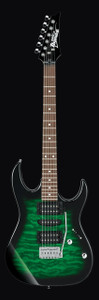
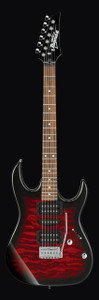
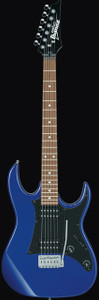
Product images are provided for reference and may not represent the exact model, configuration, or included components.

At A Glance

Neck Type
GRG7 / Maple neck
Top/Back/Body
Quilted Maple Art Grain top / Poplar body
Fretboard
Bound Purpleheart fretboard / White dot inlay
Fret
Jumbo frets
Number of Frets
24
Bridge
F107 bridge
String Space
10.5mm
Neck Pickup
Infinity R (H) neck pickup (Passive/Ceramic)
Bridge Pickup
Infinity R (H) bridge pickup (Passive/Ceramic)
Factory Tuning
1E,2B,3G,4D,5A,6E,7B
String Gauge
.009/.011/.016/.024/.032/.042/.054
Hardware Color
Black
Scale
648mm/25.5"
A : Width
48mm at NUT
B : Width
68mm at 24F
C : Thickness
20.5mm at 1F
D : Thickness
22.5mm at 12F
Radius
400mmR
Finish
Transparent Blue Burst
Description

Ibanez built the GRG7221QATBB as part of the RG Gio series, positioning it as an entry-level seven-string electric guitar within the broader RG family. The Gio sub-line was designed to bring the RG platform's playability to a lower price tier, and the GRG7221QATBB carried the extended-range format into that range with a Transparent Blue Burst finish over a quilted maple art grain top.

The guitar was constructed with a poplar body beneath the decorative quilted maple art grain top, paired with a maple neck designated the GRG7 profile. The bound Purpleheart fretboard runs 24 jumbo frets at a 400mm radius, with a nut width of 48mm widening to 68mm at the 24th fret — dimensions worth noting when sourcing a replacement nut or fretboard-end components. The 648mm (25.5") scale length is standard for the RG platform. Hardware throughout was finished in black, including the F107 bridge, which uses 10.5mm string spacing. Pickups were Infinity R humbuckers at both neck and bridge positions, passive and ceramic. The instrument shipped factory-tuned to a seven-string standard arrangement (1E, 2B, 3G, 4D, 5A, 6E, 7B) with a .009–.054 gauged set.

Owners sourcing replacement parts — particularly the F107 bridge saddles, Purpleheart fretboard nuts, or Infinity R-compatible pickup rings — should verify measurements against the specific unit in hand, and consult a qualified guitar technician for setup or hardware work.

Q&A
Have Questions?
The owner archive

From the people who own them

Nothing in The Vault is for sale. These records exist so the instruments stay documented after the manufacturer moves on — and the most useful part of that record is what owners add to it.

Owner photos

Owner photos

Put yours on the record.

The catalog shot showed one finish, under one light, a long time ago. Yours has been played. Photos from owners are what the next person finds when they are trying to identify a part, match a finish, or work out whether the one they just bought is really what the seller said it was.

Comments

What do you know about this one?

Specs only go so far. What actually fits, what breaks first, what the factory got right and what everyone ends up changing — that lives with the people who own them, not in a datasheet. Post what you know and it stays on this page for whoever comes looking next.

RELATED PRODUCTS

Gear Help, Handled

From spec questions to full builds — players who have lived this gear since 2007.

Since 2007

Fit & Compatibility

  • Bridge, tuner, and nut fit confirmed for your guitar
  • Pickup and electronics compatibility checks
  • Pedal power and amp/cab impedance matching
Ask Before You Buy

Mods & Upgrades

  • Upgrade paths for the guitars you already own
  • Wiring, routing, and hardware swap guidance
  • Advice from people who actually do the mods
Talk Mods

The Vault

  • Discontinued and EOL guitars kept on record
  • Specs, history, and known part compatibility
  • Share your builds and mods with the community
Enter The Vault