

1989 Charvel Model 4, Floyd Rose Original — returns sharp after a dive, won't hold tuning through a set.
Job ticket
- Instrument
- 1989 Charvel Model 4, Floyd Rose Original
- Came in for
- Returns sharp after a dive, won't hold tuning through a set
- Diagnosis
- Rounded knife edges and grooved posts; one fatigued spring
- Outcome
- Returns to pitch after dives; bridge sits level again
What came in
A Model 4 that had already been to two shops. Both had set it up, both had handed it back playing fine, and both times it went sharp again within a couple of weeks. The owner had been told the springs were the problem and had already changed them once himself.
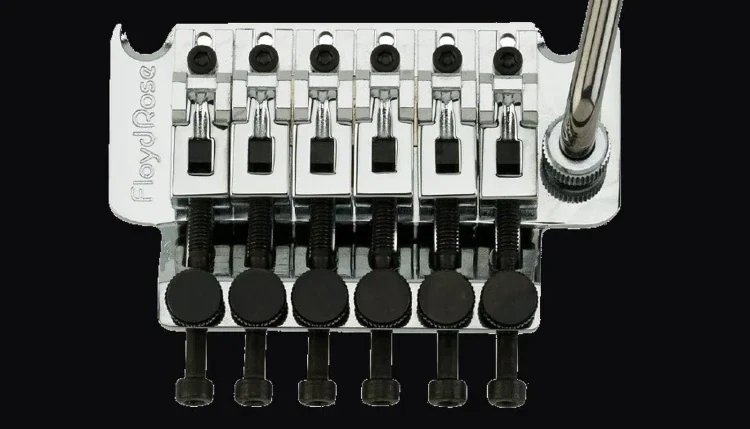
Tuned to pitch, the bridge sat nose-down into the cavity rather than parallel to the body. That on its own is a spring-balance job. But the give-away was what happened after a dive: it came back close to pitch, consistently, and consistently wrong. A guitar that returns to the same wrong place every time is not a tuning problem. It is a pivot problem.
What we found
The bridge pivots on two hardened edges bearing against two posts. When those edges are sharp the bridge returns to exactly the same position every time. When they round off, it returns to a slightly different one — and no amount of setup work will change that.
Under magnification both edges had visible flats, and both posts had wear grooves where the edges had been sitting. The springs were a mixed set: two newer, one original and noticeably slacker under the same stretch.
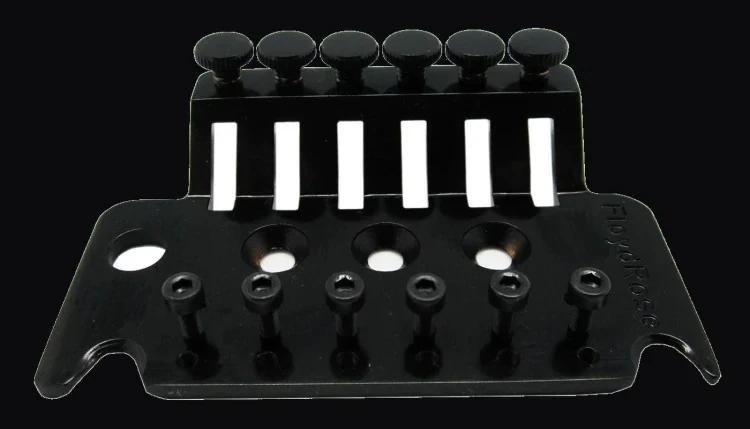
So: two faults, one of which the previous shops had correctly identified and one they hadn't. The spring balance was real. It was also downstream of the pivot wear, which is why fixing it twice didn't hold.
What we did
On a Floyd Rose Original the knife edges are part of the base plate casting. They cannot be filed back sharp — anyone offering to do that is guessing. The fix is a new base plate, and new posts and inserts to go with it, because bedding a fresh edge into a grooved post just transfers the wear straight back.
- Stripped the bridge, kept the original saddles and block
- Fitted a new base plate, and pressed in new inserts and posts
- Fitted a matched set of three springs rather than mixing old and new
- Set the claw parallel and brought the bridge level over four tuning passes
- Re-intonated, centred the fine tuners, torqued the nut clamps firm, not tight
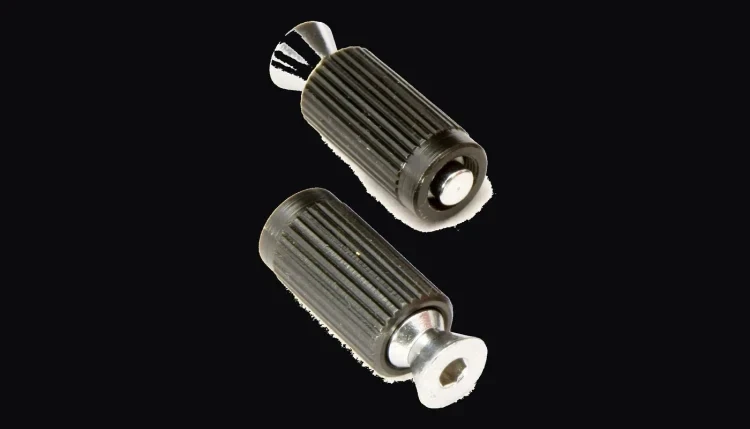
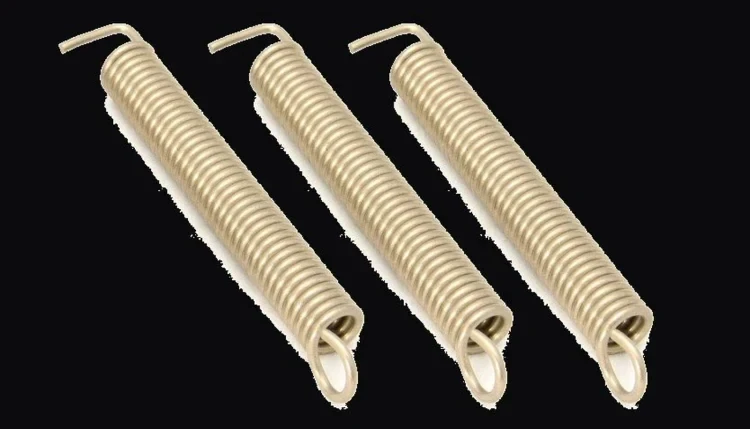
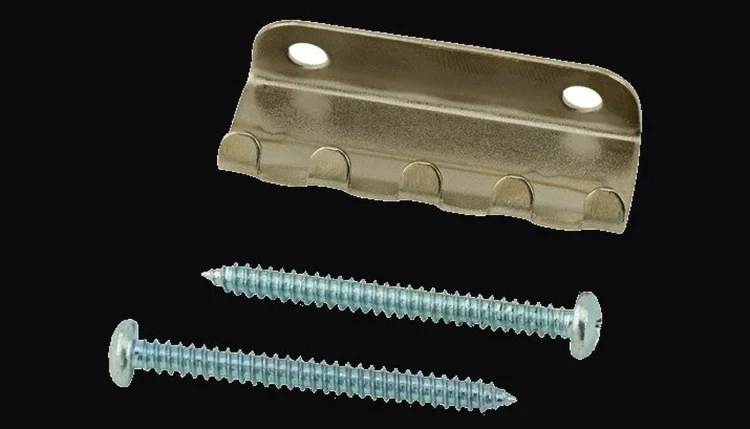
The four tuning passes are not padding. Changing spring tension changes string pitch, which changes string tension, which moves the bridge again. You keep going until a full pass changes nothing.
How it plays now
Level at pitch, and it returns after a dive. The fine tuners sit centred, so there is correction range in both directions where there was none before. Nothing here was exotic — it was a worn pivot that two setups in a row had treated as a spring problem.


