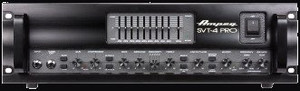
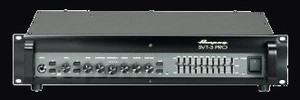
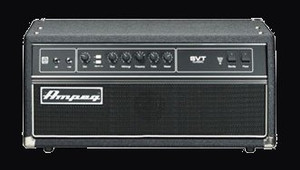
Product images are provided for reference and may not represent the exact model, configuration, or included components.

At A Glance

Output Power Rating
600 Watts RMS @8 Ω, 5% THD | 1000 Watts RMS @4 Ω, 5% THD
Signal to Noise Ratio
72 dB (20 Hz-20 kHz, unweighted)
Maximum Gain
72 dB, tone controls centered
Bass
+12/-12 dB @ 40 Hz
Midrange
+10/-20 dB @ 220 Hz, 450 Hz, 800 Hz, 1.6 kHz, or 3 kHz
Treble
+15/-20 dB @ 4 kHz
Power Requirements
~100-120V AC, 50-60 Hz, 1050 W | ~200-240V AC, 50-60 Hz, 1050 W
Size (H x W x D
4.0 in/102 mm (with feet) x 15.6 in/396 mm x 11.5 in/292 mm
Weight
15.5 lb/7.03 kg (approximately)
Preamp Tube
JJ 12AX7
Power Section
Class-D
Onboard Compressor
Variable
Effects Loop
Remote switching
Description

Ampeg positioned the SVT-7PRO within the PRO Series line of bass amplifier heads. The design combined a tube preamp stage with a Class-D power section, delivering 1000 watts into 4 ohms in a chassis weighing approximately 15.5 lb.

The preamp section was built around a JJ 12AX7 tube. Tone shaping included bass and treble shelving controls alongside a 5-position midrange control selectable at 220 Hz, 450 Hz, 800 Hz, 1.6 kHz, or 3 kHz. An onboard variable compressor and a remote-switching effects loop rounded out the feature set. The unit accepts mains voltages of 100–120V or 200–240V AC at 50–60 Hz, drawing 1050 W from the supply. At its rated output the amplifier delivers 600 W RMS into 8 ohms or 1000 W RMS into 4 ohms, both at 5% THD. Signal-to-noise ratio is specified at 72 dB unweighted over 20 Hz–20 kHz, with a maximum gain of 72 dB at centered tone controls. The enclosure measures 4.0 in high (with feet) × 15.6 in wide × 11.5 in deep.

Owners seeking servicing, tube replacement, or cabinet-pairing guidance should consult a qualified amplifier technician familiar with bass amplification.

Q&A
Have Questions?
The owner archive

From the people who own them

Nothing in The Vault is for sale. These records exist so the instruments stay documented after the manufacturer moves on — and the most useful part of that record is what owners add to it.

Owner photos

Owner photos

Put yours on the record.

The catalog shot showed one finish, under one light, a long time ago. Yours has been played. Photos from owners are what the next person finds when they are trying to identify a part, match a finish, or work out whether the one they just bought is really what the seller said it was.

Comments

What do you know about this one?

Specs only go so far. What actually fits, what breaks first, what the factory got right and what everyone ends up changing — that lives with the people who own them, not in a datasheet. Post what you know and it stays on this page for whoever comes looking next.

RELATED PRODUCTS

Gear Help, Handled

From spec questions to full builds — players who have lived this gear since 2007.

Since 2007

Fit & Compatibility

  • Bridge, tuner, and nut fit confirmed for your guitar
  • Pickup and electronics compatibility checks
  • Pedal power and amp/cab impedance matching
Ask Before You Buy

Mods & Upgrades

  • Upgrade paths for the guitars you already own
  • Wiring, routing, and hardware swap guidance
  • Advice from people who actually do the mods
Talk Mods

The Vault

  • Discontinued and EOL guitars kept on record
  • Specs, history, and known part compatibility
  • Share your builds and mods with the community
Enter The Vault