

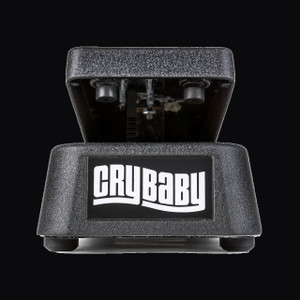
$185.70


Manufacturer-verified compatible cameras, recorders, mounts, accessories, and licenses for this product. Adjust quantities and add the entire bundle to your cart in one click.
Dunlop produced the 535Q-U Cry Baby Multi-Wah as an expanded, user-configurable take on the classic Cry Baby wah pedal. It occupied a higher position in the Cry Baby line than standard fixed-range wah pedals, offering the player significantly more control over the character of the wah effect.
The pedal centered on three primary controls: a six-position Range Selector switch, a Variable Q control, and a switchable boost circuit. The Range Selector stepped through six discrete frequency windows, moving from a wide sweep of 440 Hz–2.2 kHz at the first position down to a narrower 250 Hz–1.2 kHz at the sixth, allowing the wah character to shift from bright and vocal to darker and more compressed. The Variable Q control adjusted the resonance peak of the filter, which governs how sharp or broad the wah sweep sounds. The switchable boost circuit provided up to 17 dB of boost above bypass level, with a minimum of 0.1 dB, making it usable as a mild presence lift or a more aggressive signal push. Filter gain was rated at 15 dB. The unit drew 2.5 mA in true hardwire bypass mode and ran on a standard DC 9-volt supply, with input impedance of 1 MΩ and output impedance of 1 kΩ.
Owners tracking down replacement components or looking to service the pedal's switching and potentiometer assembly should consult a qualified guitar technician or electronics repair specialist familiar with effects pedal circuitry.
Nothing in The Vault is for sale. These records exist so the instruments stay documented after the manufacturer moves on — and the most useful part of that record is what owners add to it.
The catalog shot showed one finish, under one light, a long time ago. Yours has been played. Photos from owners are what the next person finds when they are trying to identify a part, match a finish, or work out whether the one they just bought is really what the seller said it was.
Specs only go so far. What actually fits, what breaks first, what the factory got right and what everyone ends up changing — that lives with the people who own them, not in a datasheet. Post what you know and it stays on this page for whoever comes looking next.

Manufacturer-verified compatible cameras, recorders, mounts, accessories, and licenses for this product. Adjust quantities and add the entire bundle to your cart in one click.
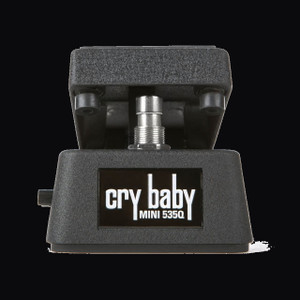
 Dunlop

Dunlop

Dunlop
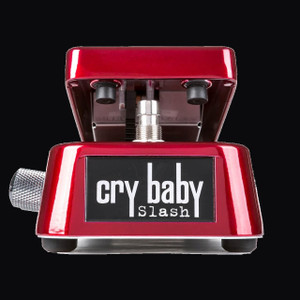
Dunlop
Looking for more Dunlop products? Shop the full Dunlop catalog →
From spec questions to full builds — players who have lived this gear since 2007.
Since 2007