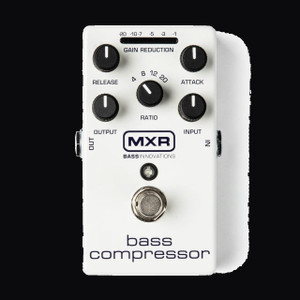
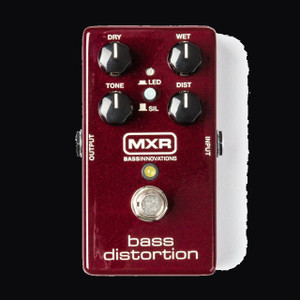
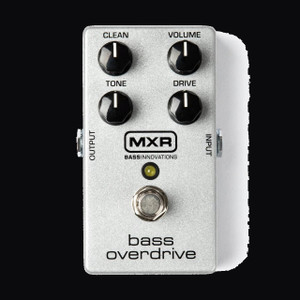
Product images are provided for reference and may not represent the exact model, configuration, or included components.

At A Glance

Input Impedance
2.2 MΩ 1/4"
Output Impedance
300 Ω, 40 Hz
Balanced Output Impedance
120 Ω, 40 Hz
Maximum 1/4" Output Level
+13 dBV
Maximum Balanced Output Level
-2 dBV
Noise Floor
-98 dBV
Thd
0.03%, 1 kHz
EQ Controls
Bass: ±16 dB, 40 Hz / Mid: ±17 dB, 250 Hz to 1 kHz / Treble: ±18 dB, 4 kHz
Input Control
Pre EQ, ±10 dB
Output Control
Post EQ, +20 dB
Bypass
True Hardwire Buffer
Current Draw
8.5 mA
Phantom Power Current Draw
5 mA
Power Supply
9 volts DC
Description

Dunlop positioned the MXR M81-U Bass PreAmp as a compact, pedalboard-format preamp designed for both live performance and direct recording applications. It combined an onboard bass preamp with a balanced Direct Out, allowing a bass signal to be conditioned and routed simultaneously to a stage amplifier and a recording interface or mixing console.

The unit provided a three-band EQ section with wide boost-and-cut ranges across Bass, Mid, and Treble bands, with the Mid band featuring a sweepable centre frequency. An Input control operated pre-EQ and an Output control operated post-EQ. Both a standard 1/4" output and a balanced XLR-format Direct Out were present, with the balanced output capable of accepting phantom power. Bypass was handled by a true hardwire buffer rather than a relay or DSP switching circuit. The pedal drew 8.5 mA from a standard 9-volt DC supply under normal operation, dropping to 5 mA when powered via phantom power.

Owners requiring replacement footswitches, DC power jacks, or XLR output hardware should consult a qualified guitar or electronics technician, as internal component sourcing for discontinued units can vary; a technician familiar with MXR-format pedal construction will be best placed to advise on compatible parts.

Q&A
Have Questions?
The owner archive

From the people who own them

Nothing in The Vault is for sale. These records exist so the instruments stay documented after the manufacturer moves on — and the most useful part of that record is what owners add to it.

Owner photos

Owner photos

Put yours on the record.

The catalog shot showed one finish, under one light, a long time ago. Yours has been played. Photos from owners are what the next person finds when they are trying to identify a part, match a finish, or work out whether the one they just bought is really what the seller said it was.

Comments

What do you know about this one?

Specs only go so far. What actually fits, what breaks first, what the factory got right and what everyone ends up changing — that lives with the people who own them, not in a datasheet. Post what you know and it stays on this page for whoever comes looking next.

RELATED PRODUCTS

Gear Help, Handled

From spec questions to full builds — players who have lived this gear since 2007.

Since 2007

Fit & Compatibility

  • Bridge, tuner, and nut fit confirmed for your guitar
  • Pickup and electronics compatibility checks
  • Pedal power and amp/cab impedance matching
Ask Before You Buy

Mods & Upgrades

  • Upgrade paths for the guitars you already own
  • Wiring, routing, and hardware swap guidance
  • Advice from people who actually do the mods
Talk Mods

The Vault

  • Discontinued and EOL guitars kept on record
  • Specs, history, and known part compatibility
  • Share your builds and mods with the community
Enter The Vault